

While Others React, I Anticipate.
I create value when there is no playbook, developing strategies to establish economic advantage.
If there is a playbook, specialists are valuable. If there isn’t one, experience and judgment are critical. I have applied both for fifty years.
Thought leaders recognize this talent

“Jeff’s strategic insights, analytical ability, and extensive network of contacts helped in a material way to improve the outcome. On top of all of that, and importantly, Jeff is a terrific human being, fearless and a great partner.”
“Jeff Balash is a creative thinker and a brilliant analyst. There is no better problem solver available.”
“Jeff Balash provides a rare combination of deep strategic knowledge with an understanding of the people side of the organization. He is one of the most creative people I have met!”
Each One Was First
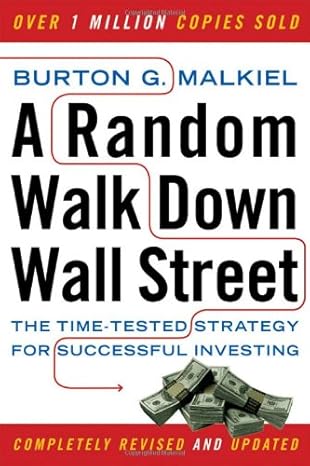
- 1970: Index investing would beat active management: Assisted Burt Malkiel with A Random Walk Down Wall Street. Index funds are now roughly 60% of U.S. equity fund assets.
- 1978: African consumer markets would matter: Established Avon Products subsidiaries in Nigeria and the Ivory Coast despite board hesitance. Both became among Avon’s most profitable businesses.
- 1982: China’s manufacturing advantage would reshape global supply chains: Initiated the first joint venture between China and a Fortune 150 company, Campbell Soup.
- 1985: High yield would redefine American finance and industry: Founded the Transactions Development Group at Drexel in Los Angeles under Michael Milken. Identified undervalued companies and financed their acquisition by corporate clients, financial sponsors and alternative asset managers.
- 1991: The world economy would shift to Asia: Co-founded the first private equity firm capitalized by an Asian institution, Sanwa Bank of Japan, then the world’s largest bank. Today, roughly 60% of the world’s population lives in Asia.
- 1999: Computing would move to the cloud: Co-founded Telephony@Work, which Oracle acquired. Twenty-five years later, I remain an investor and advise members of the same management team at their third company.
Current Work. Same Test. 2026.
The world has changed. The test hasn’t.
Today I apply the same test: find the overlooked opportunity, the non-obvious solution, and the structure that makes the economics work.
The examples below involve private equity firms, institutional investors, and operating companies — and apply equally to family offices, which increasingly invest directly in the same businesses and structures.
$3B B2B services company.
The generalist model competed in a market growing 1% to 2% annually. I identified two overlooked industries that prior growth consultants had missed. Both are growing at 10% to 15% CAGR, with potential value creation of 2.5 to 3.5 times in five years.
Top-five private credit manager. Proprietary data center financing product.
Applying the quantitative technology of an energy investment manager both optimizes the order of datacenter development and reduces underwriting risk, resulting in lower interest rates and higher LTV ratios.
$35B institutional investor.
The fund had reduced its return assumption by 20%, convinced private equity’s golden era was over. I recommended three moves: secondaries, specialist managers in inefficient markets, and greater Asian exposure. Together, these moves would restore the original return assumptions.
$100B+ AUM private equity firm. Consumer practice.
Identified affordable luxury brand extensions by multinationals in high-growth emerging markets as the best investment opportunities, and the structure to capture the opportunity without the earnings drag.
Top-five alternative asset manager. Defense conversion.
A three- to seven-year earnings drag discourages manufacturers from converting to defense production. I proposed a structure that removes the drag and makes private capital the mechanism for conversion.
Top-five alternative asset manager. Asia and Africa.
China is competing on financing while embedding its cloud infrastructure as the default standard. I proposed a structure that enables Western firms to establish essential market position without absorbing the earnings drag.
European executive search firm building a U.S. client base.
U.S. sponsors often install American executives in their European companies. Those executives usually lack local knowledge, creating investment risk. I repositioned the firm’s European CFO candidates, who understand the local cultures and rules, from a recruitment service into a risk-mitigation capability, turning a vendor into an essential strategic partner.
In each case, the firm had not previously considered the opportunity or the structure.
When I Am Most Useful
The hardest decisions rarely come with a playbook.
I look for engagements where experience, analytics and network can create nine-figure value, and where I participate in the outcome.
Firms that engage me are not buying analysis. They are buying access to opportunities and structures their own team did not see.
Three Ways to Partner
- Special Projects. 60 to 90 day sprints in M&A, AI integration, go-to-market, business development and international operations.
- Board Director or Senior Advisor. Governance for companies where technology is changing the economics. Current director, Employbridge (Apollo, $3B revenue). Audit Committee experience.
- Executive Coach. For a new CEO, after an acquisition, before an exit, or when the team has hit a wall. Certified Marshall Goldsmith Coach.
Industries: Defense, Power and Data Centers, Consumer, Staffing and Business Services
If this matches a live decision your firm is facing, email me directly: jeff@zeusthink.ai
ZeusThink — Contrarian Analysis for Leaders Who Need to See Around Corners
Each week I publish a contrarian analysis regarding the economy and business that PE professionals, institutional investors, family offices, and corporate leaders should be watching — before they become consensus. The column draws on fifty years of pattern recognition across investment banking, private capital, operating companies, global markets, and workforce dynamics. It is written for readers who make decisions, not for readers who follow them.